The question now arrives with almost every brief: "Can't AI just make this?" Often it comes with a link to a breathtaking demo clip. It is a fair question, and the honest answer is neither "yes, cancel the shoot" nor "no, it's a gimmick". AI can make a video. Whether it can make your video depends on one thing: what has to be true in it.
What AI already does well
Used as a tool rather than a replacement, AI saves real time:
- First drafts. Script outlines, alternative openings, interview questions. See writing a video script with AI.
- Seeing the idea early. Quick storyboard frames and mood images help a team agree on a direction before anyone books a location.
- Language work. Transcripts, subtitle drafts and rough translations into Arabic or Russian, which a human then checks.
- Clean-up. Removing background noise, a stray cable or a logo that should not be in the shot.
- Abstract visuals. Backgrounds, textures and stylised transitions where nothing needs to be factually accurate.
- Temporary voices. A synthetic voice lets you time an edit before the real recording. More on that in AI voice-over vs a human voice.
Where it still fails
The weak spots are exactly the things a company video is usually about.
Your people. A generated "team" is a group of strangers who do not exist. A generated version of your real CEO needs their consent, looks slightly wrong, and tells viewers something uncomfortable about how you communicate.
Your product and your place. AI is good at "a modern office" and bad at your office. It invents details: an extra door, the wrong number of buttons on the device, a skyline with towers in the wrong order. For a clinic, a factory or a property project, invented details are not a style choice, they are a mistake.
Consistency. One beautiful shot is easy. Twenty shots where the same person wears the same clothes in the same room is still hard.
Text and logos. Signs, labels and especially Arabic lettering often come out garbled.
Events. Nothing can generate what actually happened at your conference.
The trust problem
Viewers are getting better at spotting synthetic footage, and they react to it differently depending on the promise. In a stylised ad, nobody minds. In a testimonial, a company profile or a recruitment film, the whole point is "this is real". If a candidate arrives and the office looks nothing like the video, the video has done damage. A simple test: would you be comfortable with a caption saying how the shot was made?
What the rules say in the UAE
AI content is not a legal grey zone here. It falls under the same media content standards as any other video, and the UAE Media Council has specifically warned that using AI to depict national symbols or public figures without approval is a violation. Add the usual points: famous buildings have owners who control commercial use of their image (see using the Burj Khalifa in an ad), and a real person's face or voice needs their permission. Rules in this area are changing quickly, so treat this as a planning note and confirm the current position for your campaign.
Rights and confidentiality
Two quieter risks are worth a line in your brief:
- What you upload. Unreleased products, internal numbers and client names should not go into public tools without checking how the data is used.
- What you get back. Check that the tool's terms allow commercial use, and remember that a look generated in thirty seconds can be generated by a competitor in thirty seconds too.
A sensible split
For most business videos the answer is a mix:
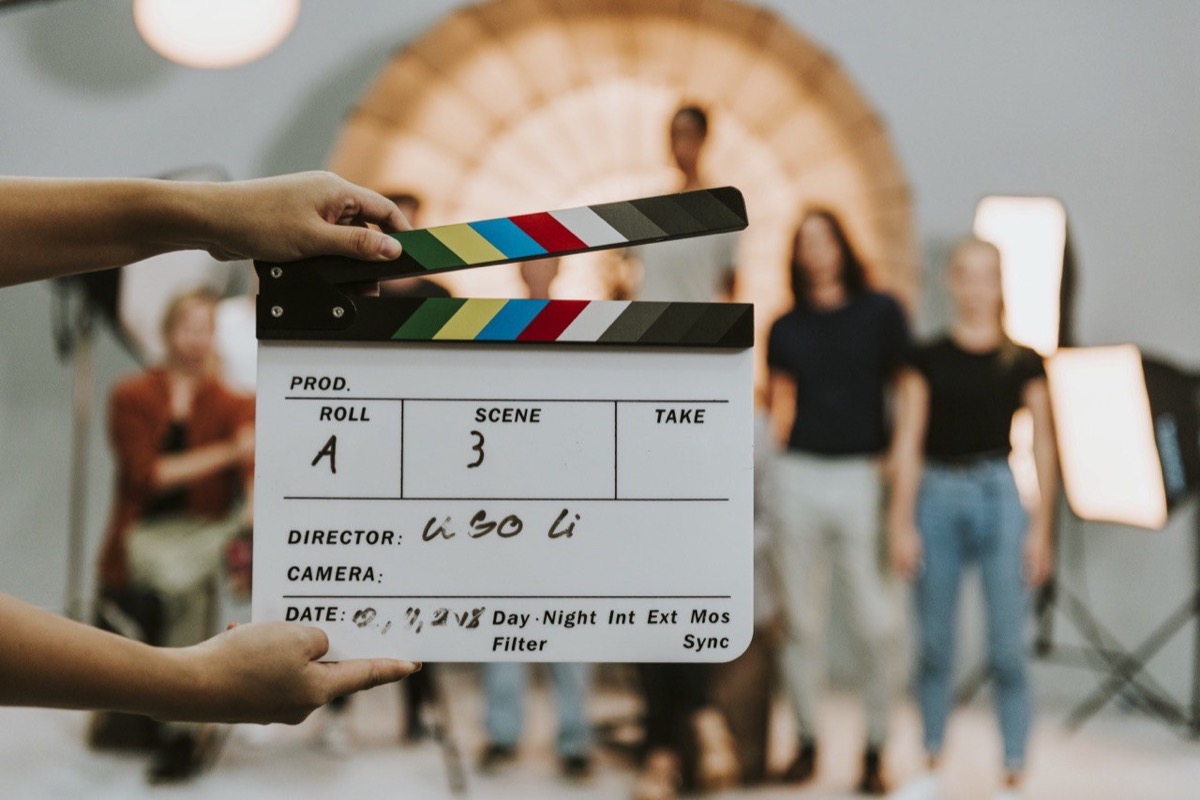
- Film what must be real: people, products, premises, events, customers.
- Use AI where accuracy does not matter or a human checks the result: planning, clean-up, subtitles, abstract graphics, extra versions.
- Decide the "must be real" list first. It usually settles the budget and the method on its own.
Fully generated video does make sense for concept films, internal pitches, abstract brand moments and explainers about ideas rather than things. For an explainer, compare it with live action and animation before choosing.
Questions people ask
Is an AI video cheaper?
It moves the cost rather than removing it. There are fewer shoot days, but more hours of generating, selecting, correcting and checking. It is cheap to get something and expensive to get exactly the right thing.
Should we tell viewers that AI was used?
For realistic images of people or places, yes: it is good practice, several platforms already ask for a label, and it protects trust. For noise removal or subtitles, nobody expects a notice.
Will AI replace the film crew?
For some shots it already has. For real people, real places and real events, it has not, and those are most of what companies film.
How we approach it
Fat Cat Media has filmed real people, places and products across the UAE since 2012, and we are happy to combine that with AI-assisted steps where they genuinely help. Tell us what must be true in your video, and we will suggest the simplest honest way to make it. See our corporate video service, or start with how to write a video brief.
Need help with corporate video?
Company profiles, factory and office films, recruitment and training videos. Send us a short brief and we will come back with an itemised quote.